“Zhuangzi did not dismiss morality for nothing, but for the alternative, a height of de-chong-fu, another aspect of his ideal of freedom and life affirmation, or what I call “religiosity.” (Ge Ling Shang – Liberation as Affirmation p 52)
Zhuangzi’s critique of morality is another step on the path leading to the ultimate state of human liberation (xiaoyao) as life affirmation (ziran). Western readers who are used to regard morality as based on religion, may dismiss this statement outright as shocking. But, for Zhuangzi, as Ge Ling Shang explains, “Morality, in association with knowledge and language, is another major cause of human suffering and alienation because it works against our spontaneity and instinct of living with nature in constructing a human-made moral world. Many attribute to Zhuangzi relativism or even nihilism inasmuch as he does not advocate any final judgment or categorical imperative of morality. I would like to argue that Zhuangzi’s thought does not fit into the shoes of either relativism or nihilism, because his critique is deeply motivated by his religiosity, or his longing for a genuine state of human existence, which is unfortunately alienated and lost in the course of human civilization.”
Against the mainstream, Zhuangzi argues that all the virtues we are obliged to follow are merely human inventions
Zhuangzi’s critique of morality did not arise in a vacuum. It was historically triggered by, or rather, in reaction to, the heavy emphasis on morality displayed by the Confucians and the Mohists of his time, while these had inherited it from the Shang and the Zhou emperors. As a result, Shang says, “most Chinese believed that morality was transcendentally given.” It was based on the belief that “the ancestral emperors enacted the moral code in accordance with the ‘mandate of Heaven’ (tianming, 天命). Rooted in nature, morality made humankind differ from other species. It is also the fundamental ground on which the whole political and social system is based.” According to the Confucians and the Mohists, “When a society no longer practices morality, it loses its integrity and order.”
On the issue of morality, Zhuangzi agrees with Laozi, who wrote: “When the Great Way is rejected, it is then that we have the virtues of humanity and righteousness.” In other words, it is only when the Great Way is rejected that we start using words such as humanity (benevolence) and righteousness, because these are no longer manifesting spontaneously in our lives.
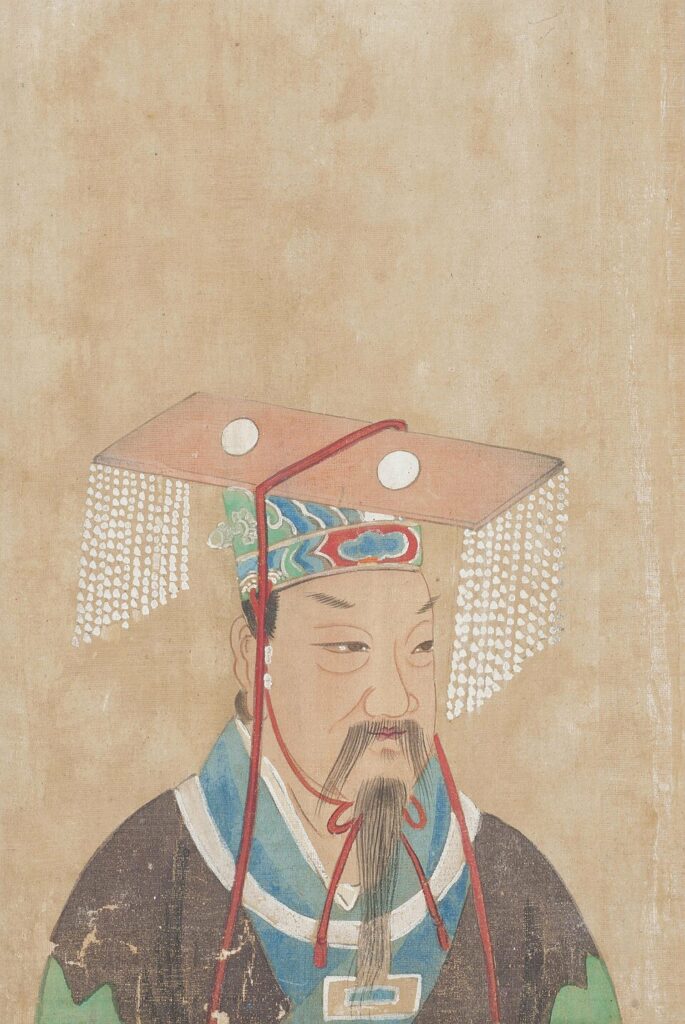
Shang explains that for Zhuangzi, morality was a human invention: “In the very beginning of human society, according to Zhuangzi’s account, there was no morality (renyi 仁义) ever employed, for people lived peacefully by their inborn spontaneity. Nothing needs be done to restrain oneself in order to be harmonious with the other and the environment (wuwei, 无为), because the Way of nature is to let everything be itself in its own development and transformation (zihua, 自化).” Zhuangzi even ventured to associate a name with the invention of morality in China. “It was the emperor Shun, the successor of Yao, who started forming morality for his governance. Since then, people lived under the guidance of those moral ideas at the cost of their spontaneity. For Confucius, that is, the triumph of human society consists in the invention of morality, which serves as its basis, whereas for Zhuangzi, society is a form of mass manipulation in which morality attempts to fix human life into prescribed social roles and thereby suppresses human freedom, which flows from the spontaneity of all things.”
As human inventions, moral imperatives reflect “human intention and volition” and cannot therefore be relied upon as the absolute measure of all values.” In his characteristically concrete style, Zhuangzi writes: “Men claim that Mao Qiang and Lady Li were beautiful, but if fish saw them they would dive to the bottom of the stream, if birds saw them they would fly away, and if deer saw them they would break into a run. Of these four, which knows how to fix the standard of beauty for the world? The way I see it, the rules of benevolence and righteousness and the paths of right and wrong are all hopelessly snared and jumbled. How could I know anything about such discriminations?” (2/6, Watson, 45–46).
In fact, Shang comments, “Zhuangzi had no objection to those values. The problem he saw is that people like to universalize and absolutize the value or morals they created, ignoring completely the fact of the relativity and the diversity of the natural world and human beings. Dao has no fixed boundaries. Speech has no static constancy. Virtually every being-in-the-world has a right to exist the way it chooses, for there is no violation whatsoever of the Dao of nature as long as one acts or transforms by one’s own nature (zihua, zixing, 自性). Only when people started contending over what was right and wrong or good and evil were they caught up within the boundaries of the dichotomies they had created, such as left and right, hierarchical relationship (lun, 伦) and righteousness (yi), humanity (ren), or benevolence and propriety (li, 礼); with this entrapment they began a life of differentiation ( fen, 分) and (bian, 辨) dispute, emulation ( jing, 竞) and contention (zheng, 争) (2/5).”
Zhuangzi’s critique was obviously aimed at Confucius and the endless disputations his “values” generated. In his view, these “ruined “the harmony and naturalness of human life … Everybody attempted to generalize their opinion as the universal truth, trying to dispense with or exclude other opinions that were different. In such a noisy world of artificial morality, Dao is compelled to conceal itself (2/3). Because of the arguments of right and wrong Dao gets lost; it is because of the loss of Dao that the love (of profit and goodness) is prompted.” So, not only these endless arguments do not lead to truth in terms of knowledge, but they stand in the way of the spontaneous unfolding of life. “Confucians and Moists have turned morality from a means of life into the ultimate goal of life. Confucius once said: “If one has heard the Dao in the morning, he would die without regret in the afternoon” (Analects, 4/15). Under such a teaching, people have been driven for moral fame (ming, 名) and knowledge, disregarding what their inherent nature (de, 德) is and what life is. Striving for moral perfection, the superior man ( junzi, 君子) dedicates his whole life to morality, just as a vicious robber strives for money and goods.”
What did Zhuangzi mean by returning to the genuine life? It is the life of spontaneity and non-action (ziranwuwei, 自然无为).
Here, Zhuangzi is in agreement with Laozi who, he says, created the idea of wuwei, according to which “Dao daos or world worlds by its natural course and rhythm, as water flows without compulsion. There is no Lord who determines or commands the existence and movement of ten-thousand-things. The effort made or action taken by forces other than spontaneity may not do any good but may disrupt the natural process and the process of self-transformation. So try not to help, try not to do anything extra, everything will be accomplished by its natural course of transformation (ziran). Without the help of morality, Laozi and Zhuangzi believe, a society would be much better maintained and governed than the one in which we now live.” This is indeed the traditional characterisation of wuwei as noncoercive action that is in accordance with the “de” of things, whether you see Dao as a single dynamic principle all must align with or as a path of practice leading to each of us realising our particular dao. This commonality between Laozi and Zhuangzi points to a deep trust ancient Chinese had in the natural world.
From the idea of wuwei Zhuangzi brought up his concept of do-not-use (buyong, 不用)
We now come to the way Zhuangzi elaborated on the basis of this common reliance on zhiran/wuwei. Since there was no way to find out who is right and who is wrong, Zhuangzi suggested that “we had better keep our mind clear (moruoyiming, 莫若以明, 2/3). The way to keep the mind clear, Zhuangzi tells us, is to “embrace all functions and utilities of the world by not using or utilizing them” (2/4) … Making no use of things is the way to leave things to themselves and free from any unnatural destruction, like trees being cut for the use of plumbs.” This is of course an allusion to the story of carpenter Shi who, in chapter 4 comes across an oak tree he originally dismisses as “good-for-nothing-wood,” re-appearing to him in a dream, where it explains that it has actually sought to be of no use, so for this tree, being useless had been very useful: it has allowed it to grow big and live long.
Likewise, Shang says, “making no use of our mind is the way to see the world as a whole or One and to attain Dao as throughness and spiritual freedom from all partial opinions. This is called ‘useless usefulness’ or ‘useful uselessness’ (wuyongzhiyong, 无用之用) … This is the mind of a sage of Dao, clean as a mirror, ‘going after nothing, reflecting but not storing. Therefore he can win over things and not hurt himself’ (7/6, Watson, 97). Shang adds that, “furthermore, it is the mind of no-mind (wuxin, 无心); nothing can be used in it. It becomes a part of nature and is itself nature or Dao. In this state genuineness and innocence are restored and one becomes a true person, a person of Dao and de (virtue).”
Zen practitioners will immediately resonate with the word “no-mind” which in their practice is described as a state of mind rather than an attunement with nature, even less with any particular dynamic principle seemingly originated outside. Still, no-mind in its positive sense of enhanced receptivity was a Chinese borrowing, which, Nishihira Tadashi explains, had supplanted an earlier interpretation of no-mind as equivalent to that of kokoronashi, “mindless,” or “heartless,” used in a disparaging fashion to refer to someone being “thoughtless, inconsiderate, lacking in refinement, or insolent … all insulting descriptions.” The first Japanese reference of mushin in positive sense is found in the writings of Ippen Shonin (1239-1289), when he writes: “Ushin is the way of life and death, mushin is the castle of nirvana.”
Nishihira also compares no-mind to the state of consciousness of “a master musician absorbed in playing his harp will be good enough to give at least some idea as to what kind of a thing Zen Buddhism is thinking of when it talks about the “no-mind.” The musician is so completely absorbed in his act of playing, he is so completely one with the harp and music itself, that he is no longer conscious of the individual movements of his fingers, of the instrument which he is playing, nor even of the very fact that he is engaged in playing. Because a master musician has become one with the music, he is no longer conscious of the instrument and does not feel that he is playing it. It is no longer that ‘I’ ‘play’ the instrument. The harp itself plays music, and I am one with this music. ‘Acting as one with something’ is like this state. Play (act), having become one with the harp (thing). The differenciation between the thing (harp) and the I vanishes, and I become the thing – become of one body with the music, and play. Musicians themselves refer to this state as ‘being in the zone’. Other scholars have suggested that athletes too, are experiencing something akin to mushin during intense periods of training and competition.“ There is something paradoxical about this “becoming the music, and no longer conscious of the movements of one’s fingers,” and, at the same time, being “strongly conscious of ‘the self that is one with the music … Because one is so conscious of ‘oneself as one with the music’, one is not conscious of ‘I+play+the instrument’. In exchange for that consciousness, one is strongly conscious of the self as unified with the music. Therefore, it is not unconsciousness but a special form of consciousness that is different from the ordinary.”
Given the destiny the word wuxin underwent when Chan lineages crossed the China sea to develop into the Soto and Rinzai schools, it’s especially interesting to learn how it originated in the Zhuangzi.
In contrast to the Confucian gentleman who presumably possessed all moral virtues, Zhuangzi promotes the person of daode.
Shang warns us that, while “in modern Chinese, the word daode refers to morality, … during the pre-Qing period, perhaps not many people would equate ‘daode’ (道德) with ‘morality’; they would rather use ‘ren’ (benevolence) or “yi” (righteousness) for what we now call morality. For Daoism, Dao and ‘de’ have very little to do with morality; they are words that represent the Daoist understandings of nature and the nature of things. In the book of Laozi, Dao is the metaphysical reality and the cosmological origin of the world. And it is through de, which refers to individuality and the actual or tangible existence of things, that the Dao manifests itself.” In his commentary on Laozi, Wang Bi wrote: “Dao is where and why things are [created]; de is what things have gained [their nature]” (Wang, 95).
“In the Book of Zhuangzi, daode is considered one of the ways to cure the illness caused by morality. Zhuangzi refers to de as virtue or genuine, spontaneous, and excellent nature of actual human beings and things, while Confucians refer to it in terms of moral virtue. He maintains that we ‘gained’ (de, 得) virtue directly from nature, that it is the manifestation or actuality of Dao within our existence.To live in such virtue means to live with or as Dao. Morality, knowledge, and language are refuges only for those who have lost their de or virtue.”
Chapter 5, De Chong Fu” (德充符), “Virtue Adequate and Conformable, articulates Zhuangzi’s idea of “de”
In that chapter, “Zhuangzi suggests that when de is adequate inside a person and simultaneously conformable to the outside world, one becomes a great sage. Instead of exhibiting various famous moral exemplars, as Confucius used to do, Zhuangzi tells us stories about the ugly and deformed as his ideal models of de.” This rather unexpected statement may help readers of the Zhuangzi the frequent references made there to imperfect or deformed people.
Shang explains: “These people are imperfect or deformed in their appearance, but they often have shown great integrity and personality, being revered, loved, and even followed by others. Why? Because they are persons of de-chong-fu. Their minds are filled with de with no room left for any ‘all-too-human’ things. This is because (1) they don’t stand up teaching (morality and knowledge), they don’t sit down arguing (right and wrong), yet people like to follow them and learn from them (5/1); (2) they have no attachment to anything, treating everything as equal and identical, therefore nothing that has happened could move or change their de and peace of mind. No difference exists for them between good and bad, right and wrong, big and small, high and low, life and death, simply following or being the course of nature; (3) they never try to do anything they cannot accomplish, nor complain about their incapability, yet always enjoy their fate as it is. Therefore, no conflict arises but only harmony between the person of de and nature, the person of de and other people. This is what dechongfu means by virtue that is adequate inside and conformable outside.” The inability for such people to identify with an ego that is believed to a representation of their self has liberated them from attachment to self, in the same way as carpenter Shi’s oak tree was liberated from its wish to ‘be’ a special tree.
Shang concludes the subsection on wuwei as follows: “From the above discussion, we see that Zhuangzi did not dismiss morality for nothing, but for the alternative, a height of de-chong-fu, another aspect of his ideal of freedom and life affirmation, or what I call ‘religiosity’.”
Sources:
Ge Ling Shang – Liberation as Affirmation: The Religiosity of Zhuangzi and Nietzsche (2006)
Nishihira Tadashi – The Philosophy of No-Mind – Experience Without Self (2024)