
“What Ueda means by ‘nonmysticism’ (Nicht-Mystik) is not a simple rejection of, but rather a movement through and out of mysticism. It is both a fulfillment of the genuine thrust of mysticism and a breakthrough beyond mystical union. In a conversation at his home in July of 2006, Ueda graciously agreed with my suggestion that this dynamic movement through and out of mysticism may be more appropriately referred to as ‘transmysticism’ (Trans-Mystik) or as ‘demysticism’ (Ent-Mystik) … For clarity’s sake, however, I will use the expression ‘transmysticism’, meaning that it goes all the way through (tsū, 通) and beyond (ka, 過) mysticism.” (Bret Davis – The Dialectics of Absolute Nothingness p 183).
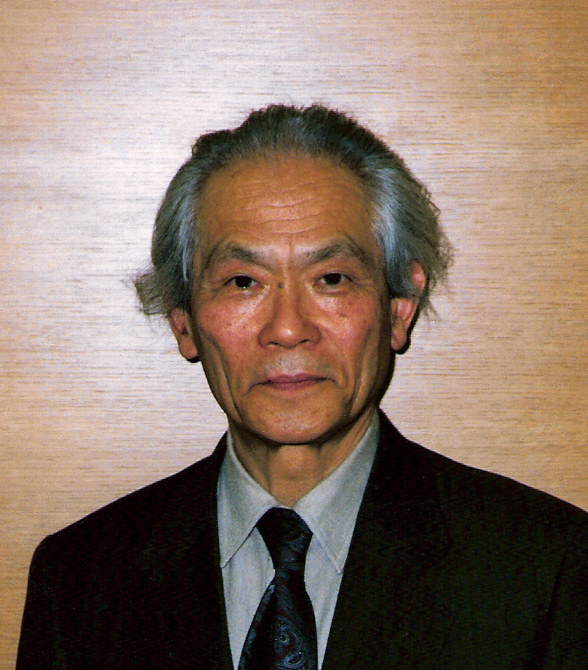
Ueda Shizuteru (1926-2019) fulfilled the dream of his two mentors, Nishida Kitaro, founder of the Kyoto school, and Nishitani Keiji, Nishida’s direct disciple, and Ueda’s teacher: the opportunity to study the sermons of Meister Eckhart in their original High Middle German and Latin, to delve deeper into his thought, particularly concerning the “god of nothingness” which he posited beyond the creator God of traditional Christian theology. Following the publication of his dissertation at Marburg University, Ueda was invited by Ernst Benz, his supervisor, to write an extra chapter on “Eckhart and Zen” to be added to his book as an appendix, and this text was later published in Japanese under the title “Zen and Mysticism.”
Transmysticism (non-mysticism or de-mysticism)
Bret Davis studied closely with Ueda in Kyoto during a period of over twelve years, commuting—in his own words—between his academic studies at Kyoto University and his Zen practice at Shokikuji Temple, where Ueda taught after receiving the “seal of certification” (inka shōmei) as a Rinzai Zen master from Kajitani Sōnin Rōshi (1914–1995), the temple’s former abbot.
Davis tells us that Ueda had first used the word “non-mysticism,” Nicht-Mystic or hi-shinpishugi, but he had also suggested the word “Ent-Mystik” or datsu-shinpishugi, which would translate as “demysticism.” He explains this suggestion as follows: “The manifold senses of the German prefix Ent- may be particularly appropriate here, since it can signify an actualization and development of a potential (as in entflammen and entwickeln), as well as an undoing and removal of a burden (as in entfesseln, entladen, and entgiften). An Ent-Mystik could thus be understood both, on the one hand, as a commencement and development of mysticism, and, on the other hand, as a shedding of and release from mysticism.” De-mysticism would have been a satisfactory translation, but Davis felt that transmysticism (Trans-Mystik or tsūka-shinpishugi) was the term that naturally came to mind to convey the idea of “going beyond” in the English-speaking world, and Ueda concurred with this view. In Eckhart’s Christian terminology, “non- or transmysticism involves a double negation, a releasement from the ego and then from God. God is let go of for the sake of nothing, that is, for an experience of absolute nothingness, which in turn returns us to a direct engagement in the here and now of everyday activity.”
Nonmysticism as transmysticism is not a static state of being, but rather a single fluid movement through negation to affirmation, then on to a second negation, and finally back to a radical reaffirmation
Davis explains: “It is thus a movement made up of the following four moments: 1) an ecstatic transcendence of the ego; 2) a mystical union with God or the One; 3) an ecstatic breakthrough beyond God or the One into an absolute nothingness; 4) a return to an ecstatic and instatic engagement in the here and now. Despite this analysis into four apparently discrete moments, these ideally make up a single fluid movement from one to four.”

The first two moments correspond to the way mysticism is traditionally understood in Christianity: self-negation leads to a mystical experience of union with the divine. Uniquely among Christian mystics, Meister Eckhart, who posited a godhead of nothingness above God as creator, held that this union with God had to be transcended through a second negation that would free the mystic from God, opening the way for the two last moments corresponding to transmysticism. This, Ueda saw as closely resonating with his own Zen actualisation of awakening.
The entire movement of transmysticism as a series of ecstasies
Davis says that “We can understand this entire movement of transmysticism in terms of a series of ‘ecstasies’. Ecstasy – in the strict sense of ekstasis, literally a ‘standing outside oneself’, which implies, as the Japanese term datsuji literally means, a ‘shedding of the [ego] self’—is an initial prerequisite for the mystical union. Yet, as mysticism intensifies toward transmysticism, beyond this initial ekstasis, beyond this letting go of the ego for the sake of union with God, we find a second ekstasis, a letting go of God for the sake of nothing, that is, for the sake of an experience of ‘absolute nothingness’.”
Ueda understood absolute nothingness dynamically as “the activity of emptying out” (kūkai no hataraki), that is, as the ecstatic movement of transmysticism itself
For Ueda, absolute nothingness was not anything resembling Eckhart’s “ineffably transcendent Godhead beyond God” which could be mistaken for the metaphysical entity John Krummel refers to as a “me-ontology” i.e., a substratum of emptiness substituted to the metaphysical substratum of being. Instead, Krummel says, “it was an “an-ontology which takes a middle standpoint permitting a view encompassing being and non-being, affirmation and negation,” a view which Ueda describes as a “dialectical circling movement between self-negation and self-affirmation.”
In a culture foregrounding change over being, “Ueda understood absolute nothingness dynamically as ‘the activity of emptying out’ (kūkai no hataraki), that is, as the ecstatic movement of transmysticism itself. He also understands absolute nothingness topologically as the ‘open expanse’ (kokū) wherein the true self is realized in and as an ecstatic engagement with the everyday world. The true self is realized as a ‘self that is not a self ‘ (jiko narazaru jiko) in the sense that it is itself only in not being itself; that is to say, the true self realizes itself as an ‘ekstasis and instasis’, a standing outside of itself and into a nondual engagement with other persons, things, and events. While the ego-self mistakes itself as a closed circuit of self-affirmation in saying ‘I am I’, the true self is a dialectical movement in which self-affirmation is reached only by way of self-negation. The self-identity of such a self can be expressed as ‘I, in not being I, am I’.”
The genuine thrust of mysticism finds fulfillment in its own self-abnegation. So, for Ueda, “true mysticism” is the entire movement from union with God, i.e., mysticism in the traditional Christian sense, all the way to nonmysticism (or transmysticism)
In Ueda’s words: “I regard true mysticism as the entire movement from union to ekstasis’, that is to say, the entire movement ‘from mysticism to nonmysticism’, hence up to the point of including the moment of ‘to nonmysticism” In fact, in this case the expression mysticism ceases to be fitting; it is no longer appropriate. True mysticism is not mysticism. Rather, it is appropriate to call it nonmysticism.”
The transmysticism of Meister Eckhart
In his thesis on Meister Eckhart, titled “The Birth of God in the Soul and the Breakthrough to the Godhead”—Ueda subordinated the “motif of birth” to the “motif of breakthrough. “In the first, a union with God is brought about by way of the birth of Christ in the soul. In complete passivity, one receives the Son of God in and as one’s own soul. In the words of Paul, ‘It is no longer I who live but Christ who lives in me’ (Galatians 2:20). Since the Son is in essence one with the Father, human persons thus become united with the Person of God. The birth of Christ in the Soul is therefore the union with God, the unio mystica.
It is with the breakthrough motif that Eckhart moves beyond the unio mystica, “demanding as it does an ekstasis not only of the soul, but also of the Person of God as the transcendent Creator. Here Eckhart speaks of “letting go of God for the sake of God.” In Eckhart’s words: “Therefore I pray to God that he may make me free of “God,” for my real being is above God if we take God to be the beginning of created things. . . . [In] the breaking-through . . . I come to be free of my will and of God’s will and of all his works and of God himself.” But, Ueda points out, “the God that is united with here is no longer the divine Person; it is rather the ‘Godhead” (gotheit) as the impersonal (trans- or prepersonal) essence of divinity. Moreover, elsewhere Eckhart makes clear that, beyond the passive reception of the birth of the Son in the soul, what he calls the ‘little spark’ in the soul actively seeks to unite with the transpersonal Godhead beyond the Trinity, with the divine ground (grunt) beyond or before any personification and indeed any determination whatsoever of ‘God’.” Eckhart’s radical mysticism aims not at a communion with an interpersonal Other; for “the spark in the soul . . . wants nothing but God, naked, just as He is. . . . [It] wants to get into . . . its simple ground, into the silent desert into which no distinction ever gazed, of Father, Son, or Holy Ghost. Eckhart indeed sometimes speaks of this ‘silent desert’ of the Godhead in apophatic terms as a ‘nothingness’ (niht).”
Eckhart reverses the traditional interpretation of the story of Mary and Martha
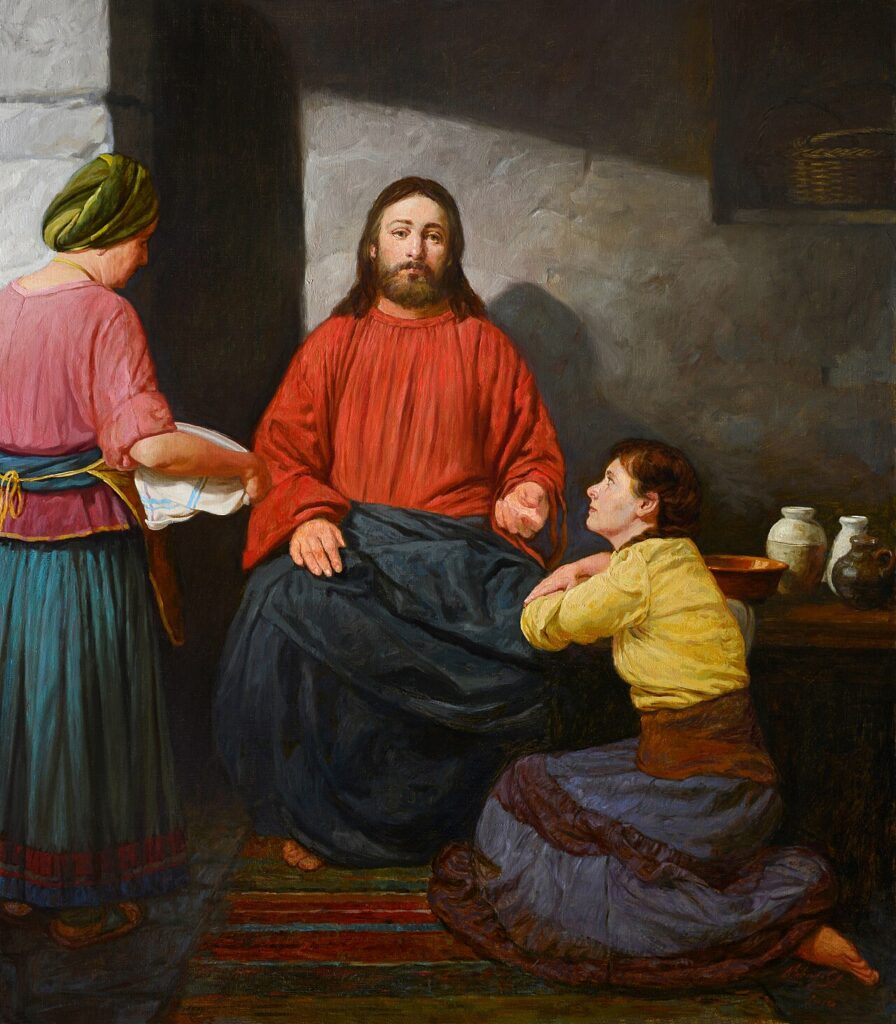
Given Eckhart’s emphasis on going beyond the union with God into the apparently absolute transcendence of nothingness, one could have expected an escape into other-worldliness. The very opposite is the case. Davis writes:
“Eckhart does not stop at a contemplative absorption in a mystical nothingness. In his account of the story of Mary and Martha (Luke 10:38-42), Eckhart reverses the traditional interpretation – which uses the story to assert the preeminence of the vita contemplativa of Mary over the vita activa of Martha—to claim that Martha’s activity, ‘busy about many things’, is in fact a profounder expression of union with God than the passivity of Mary, who remains seated at Jesus’s feet. Martha’s busyness expresses the ‘pure activity’ (lūter würken) which comes directly out of God. More radically put, the life of this pure activity might be said to arise ‘without why’ out of the silent desert of absolute nothingness.” We are not far from Zen’s “chop wood, carry water”!
Likewise, Eckhart wrote: “If anyone were to ask a truthful man who works out of his own ground: ‘Why are you performing your works?’ and if he were to give a straight answer, he would say nothing else than: ‘I work, therefore I work.’” When one lives from out of the abyssal grunt [ground] of indistinction, one no longer seeks an external reason for one’s works; for now ‘life lives out of its own ground and springs from its own source’. There is no longer “any need for an external objective answer to the question ‘why’.”
“Living without why” is Eckhart’s phrase characterising the final moment of the ecstatic thrust bringing about an affirmation of all things just as they are
Ueda’s teacher Nishitani had already talked about the Leben Ohne Wahrum (living without why) movement which Eckhart had not founded, but of which he was the best known figure, poetically encapsulated in Angelus Silesius’ poem: “The rose is without why. It blooms because it blooms. / It pays no attention to itself, asks not whether it is seen.”
Nishitani had asked: “What kind of a life is [the] life of affirmation?” and he had answered: “The lived realization of emptiness, its existential appropriation, conquers nihilism with an attitude of profound play that might be characterized by the gatheredness of samadhi or in Eckhartian terms life living itself without why or Leben Ohne Warum … In freedom from the fetters of attachment, all our work takes on the character of play without aim or reason or cause, having cast off the character of why or wherefore.” Nishitani also compared it to the child’s play, noting that, for the child, play is a very serious activity.
The transmysticism of Zen
Nishida had stated quite provocatively: “Zen has nothing to do with mysticism, as many think. Kensho, seeing one’s nature, means to penetrate to the roots of one’s own self. The self exists as the absolute’s own self-negation. We exist as the many through the self-negation of the One … Kensho means to penetrate to the bottomlessly contradictory existence of one’s own self … What has been called mysticism in Western philosophy since Plotinus is something extremely close to Zen, but I think that Western mysticism has not in essence transcended the standpoint of object logic. Indeed, the One of Plotinus stands at an opposite pole to the Zen experience of nothingness. Neo-Platonism did not in fact attain to a religious celebration of the ordinary and everyday as we find it in the Zen tradition” (Nishida, Last Writings).
For this reason, Zen had traditionally been described as a religion of Self-Power (jiriki) in contrast to Other Power (tariki) as was the case for Pure Land Buddhism. Yet, Nishida pointed out that it is the negation of self – rather than the self – that opens the way to enlightenment. Davis, for his part, insists that Zen explicitly “discourages reliance on an “Other Power” (tariki); indeed, insofar as one is inclined to cling to the Buddha as a transcendent Other, one must ‘kill the Buddha’ along with all other attachments and projections of the ego. But, rather than calling on an Other Power, Zen calls for a ‘direct pointing to the human mind, seeing into one’s true nature and becoming a Buddha’ (attributed to Bodhidharma).”
Rather than call Zen a religion of other-power, one can say that the Self as Buddha-nature is as such empty of substantial being
Davis quotes Hakuin’s Song of Zazen (Zazen wasan) where he says that “this “Buddha-nature” or “self-nature” (jishō, 自性) is in truth “no-nature” (mushō, 無性); it is not the essence of a substantial being but rather the activity a spontaneous freedom and a compassionate openness. The Buddha mind is in truth “no-mind” (mushin, 無心), which refers not to a meditative absorption in Nothingness, but rather to the sincere ‘everyday mind’ (byōjōshin, 平 常心) of an ecstatically intimate engagement in the activity of the here and now, whether it be washing your bowls, carrying firewood, or carrying a woman across a stream” (here alluding to a well-known Buddhist story). This everyday no-mind of total engagement in the here and now is both the nearest thing to and the farthest thing from our usual mental state of being.” This had led Nishitani to write that “The distinguishing feature of Buddhism consists in its being a religion of the absolute near side [zettai-teki shigan, 絶対的此岸].” But because this absolute near side, like Eckhart’s Gottheit, lies “nearer to the self than the self is to itself,” it is necessary to speak of it as a “transcendent near-side.”
Dōgen’s double formulation, “dropping off the body-mind; the body-mind dropped off” – Nishitani: “the None beyond the One” does not dissolve but rather enables the distinct presencing of the Many.”
There is a koan staging Yanyang (Jp Gonyo) asking Zhaozhou (Jp Joshu): “How about when one arrives carrying not a single thing [i.e., having let go of all attachments]? Zhaozhou responded: ‘Cast that down’ [i.e., let go of your attachment to the idea of having let go of all attachments!” This is apparently the origin of Dogen’s expressions “casting down the body-mind” and “dropping-off the body-mind” (shinjin- datsuraku). Davis writes: “In Dōgen’s double formulation, “dropping off the body-mind; the body-mind dropped off,” we find succinctly expressed the circular movement of transmysticism whereby everyday human existence is radically negated (reifications and attachments dropped off) and then reaffirmed (freely and compassionately picked up again). This movement of negation/reaffirmation is also succinctly formulated in the Heart Sutra’s well-known lines, “form is emptiness; emptiness is form” (in Japanese: shiki soku ze kū, kū soku ze shiki). Nishitani encapsulated this dialectical movement as “the None beyond the One” does not dissolve but rather enables the distinct presencing of the Many.”
“All things are returned to the One; but where does the One return to?” None and yet Many.
To most newcomers to a Zen practice, the four stage movement through and out of mysticism leading to a breakthrough beyond mystical union” is not clearly understood, because their focus is obviously on the first two moments, with the hope of being granted a kensho! Statements such as “All things are returned to the One; but where does the One return to?” remain cryptic. So, Davis explains: “To begin with, for Zen too, all is One; and it is necessary to directly stand at this standpoint of the ‘One’ where all things lose their differences and distinctions and the ‘equality of one taste” is thoroughly apprehended. This experience is indispensable. However, Zen is found neither in the view that all things return to the One nor in the direct experience of that One. If we simply extract this moment, what we have is rather . . . one more common example of a standpoint of mysticism. Going beyond the standpoint of this provisional precondition, only when it is asked ‘Where does the One return to?’ does a world open up wherein Zen can exhibit its original element. . . . [According to Zen,] the truth of the ‘One is ‘None and yet Many” [mu ni shite ta]. Here, the Many is the variety of the One, while the One is the oneness [ichinyo] of the Many; and this dynamic relation itself is the concrete body of the None [i.e., of absolute nothingness]. In experiential terms, may I say that the kensho momentarily realises the union with the One undifferentiated wholeness of reality wherein one no longer feels oneself as merely standing wherever one happens to be, but instead feels, as it were, everywhere at once, and safe as never before. When it ends, more often than not, one is left with the hope that, with more practice, it will one day become one’s everyday experience of reality. Further “post-kensho” practice is indeed necessary, but it will not turn the oneness into a permanent “state” of consciousness. It will instead train the practitioner to let go of their quest for a “special” experience, and lead them to encounter reality empirically “just as it is.” Dongshan, a Chinese ancestor of Dogen, encapsulated this approach as “Just this is it.” This “it” is not, however, merely a collection of discrete “things,” but a “network of dynamic interconnected relations as described by Fazang in the Chinese Huayan school, where the One is in all parts, while all parts are in the One.
Eckhart’s residual mysticism and Zen’s thoroughgoing transmysticism
Davis says that “Eckhart’s paradoxical coaffirmations of the One and the Many, and of profound stillness in the midst of vibrant activity, do indeed bear striking resemblances to the transmysticism of the Zen school of Mahayana Buddhism.” But Ueda, after reading a text by Rudolf Otto on “Eckhart and Zen” in an appendix to Mysticism East and West, saw a difference in the way Eckhart and Zen describe the way the “metaphysics of flow” is oriented in the two traditions. This new insight led Ueda to draw new conclusions based on Eckhart’s concept of nothingness, which led him to reconsider the superiority of the active Martha over the contemplative Mary.
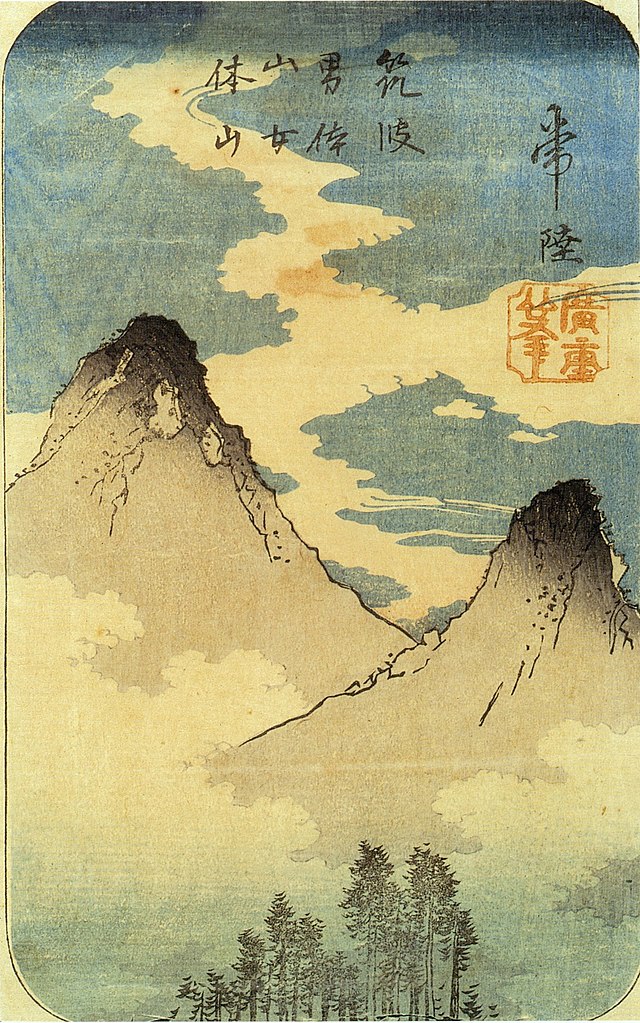
Davis explains: “Despite the world-affirming character of Eckhart’s thought, his metaphysics of flow begins and ends with the Godhead as an otherworldly source and an eschatological end of the created world. The path of Zen, however, begins and ends with the everyday world. Life in the midst of the nondual multiplicity of the world is affirmatively engaged in by way of passing through and beyond the One, as opposed to the world being affirmed as an outflow of and pathway back to the Godhead. Zen’s transmysticism begins and ends here on Earth, with the oak tree in the garden, with three pounds of flax in our hands, or even with a shit stick laying at our feet.” As a result, Eckhart (in common with Christianity as such, and even Western philosophy and art) “pays little attention to the world of nature … Quoting Eckhart as saying, “To one who looks at a stick in the divine light, the stick looks like an angel,” Ueda writes: “Eckhart’s affirmation of the stick is not an affirmation of the stick as stick, but of the stick as an angel in divine light. Zen Buddhism speaks more straightforwardly: ‘Mountain as mountain, water as water’.”
So, Davis continues, this means that, “for Eckhart, the human interpersonal relation remains mediated by the soul’s relation to God; whereas, for Zen, the place of interpersonal betweenness is ultimately nothing but the open expanse of the empty circle.” Whereas the painting illustrating the Mary and Martha story shows Martha working in the kitchen in the foreground, and Mary kneeling before Jesus in the background, even as Martha turns from contemplation (mysticism) to action (transmysticism), the significance of her activity appears to remain anchored by this withdrawing yet still present reference to transcendence.”
Eckhart’s nothingness remains an adjective modifying a substance. In contrast, Zen’s absolute nothingness is a verb referring to “the activity of emptying out”
In the final analysis, Ueda concludes that “Eckhart’s ‘nothingness’ remains a negative theological sign pointing towards an inexpressibly higher Being.” Because Eckhart’s Godhead remains associated with the creator God nothingness becomes a quality of the Absolute. He says: “When all is said and done Eckhart’s nothingness of the absolute (zettai no mu, 絶対の無) is an adjective modifying a substance. In contrast, Zen’s absolute nothingness (zettai mu, 絶対無) is a verb referring to ‘the activity of emptying out’ (ūkai no hataraki, 空開の働き).” After much hesitation, it seems, “Ueda finds metaphysical residues in Eckhart’s thought that impede the realization of the suchness of things in absolute nothingness, and that inhibit the free and compassionate life without (the question) why. Only in Zen does Ueda find the nothing pushed through to a transcendence of transcendence, a negation of negation that enables a profound and intimate reaffirmation of the everyday … Whereas in “Eckhart’s thought it is the category of ‘substance’ that is, in the last analysis, definitive,” Zen’s absolute nothingness ‘dissolves substance-thinking’.”
May I add that this had also been Zhuangzi’s insight. Zhuangzi boldly held that “There is nothing behind the scene of the world of the ten-thousand-things controlling the coming and going of the appearances; it is the ‘thing-as-itself (ziji) that moves, changes, lives, dies, presents, and absents all by itself.” Therefore, there is “no intention to leave or escape from actual life and this world. On the contrary, xiaoyaoyou [rambling without a destination] affirms life, this life in this world, without denial or rejection” (Ge Ling Shang – Liberation as Affirmation).
Sources:
Bret W Davis – “Transmysticism: Ueda Shizuteru on Zen after Meister Eckhart” in the Dialectics of Absolute Nothingness: The Legacies of German Philosophies in the Kyoto School – Edited by Greg S Moss and Takeshi Morisato (2025)
Nishitani Keiji – Religion and Nothingness (1961)
Ge Ling Shang – Liberation as Affirmation: The Religiosity of Zhuangzi and Nietzsche (2006)